
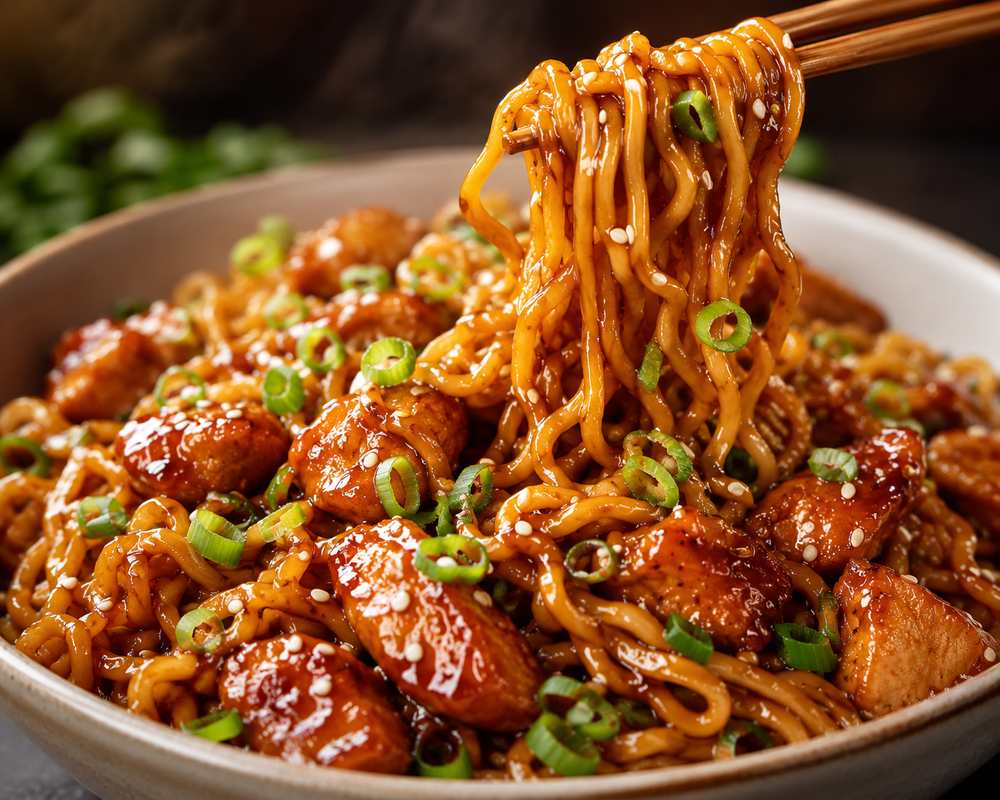
These Glossy Scallion Honey-Garlic Chicken Noodles are made with browned chicken, springy curly noodles, fresh garlic, ginger, and a sweet-savory sauce that coats everything without turning the bowl into noodle soup.
The chicken is cut into small pieces, briefly seasoned, and dusted with cornstarch. That thin coating helps the outside brown quickly while keeping the center tender. It also gives the finished sauce something to hold onto, which is why the chicken looks glossy rather than wet.
There is honey in the sauce, but this is not supposed to taste like dessert wearing a soy-sauce disguise. Rice vinegar and lime juice bring acidity, chicken broth keeps the glaze from becoming too concentrated, and fresh ginger adds a little warmth. The white parts of the scallions cook with the garlic, while the green tops are saved for serving so you get both cooked and fresh onion flavor.
The noodles are boiled separately and added only after the chicken and sauce are ready. This makes their texture much easier to control. They stay pleasantly chewy, and a splash of reserved noodle water lets you loosen the glaze whenever it becomes tighter than expected.
Serve the noodles straight from the skillet while they are hot and shiny. Once everyone starts pulling long strands from the bowl, tidy table manners become more of a suggestion than a rule.
Ingredient Notes
Chicken Thighs
Boneless chicken thighs stay tender during high-heat cooking and have enough flavor to stand up to the sauce.
Chicken breast also works, but its pieces should be cut evenly and removed from the skillet as soon as they are cooked.
Curly Noodles
Plain ramen-style noodles give the dish the closest look to the inspiration image. Discard any seasoning packets because the homemade sauce already contains plenty of flavor.
Lo mein, egg noodles, udon, and even spaghetti can also work.
Honey
Honey provides sweetness and contributes to the glossy appearance of the sauce.
The recipe uses enough to taste clearly without overwhelming the garlic, ginger, and soy sauce.
Low-Sodium Soy Sauce
Low-sodium soy sauce gives you more control over saltiness, especially because the noodles and broth may also contain salt.
Fresh Garlic and Ginger
Fresh aromatics give this sauce much more depth than powdered seasoning alone.
Garlic powder is useful for seasoning the chicken, while fresh garlic belongs in the skillet.
Rice Vinegar and Lime Juice
These ingredients prevent the honey sauce from feeling heavy.
Rice vinegar gives gentle acidity, while fresh lime adds brightness at the end.
Cornstarch
Cornstarch is used twice:
- A light coating on the chicken encourages browning.
- A small slurry thickens the sauce.
Adding the slurry separately means you can stop when the sauce reaches the consistency you like.
Ingredients
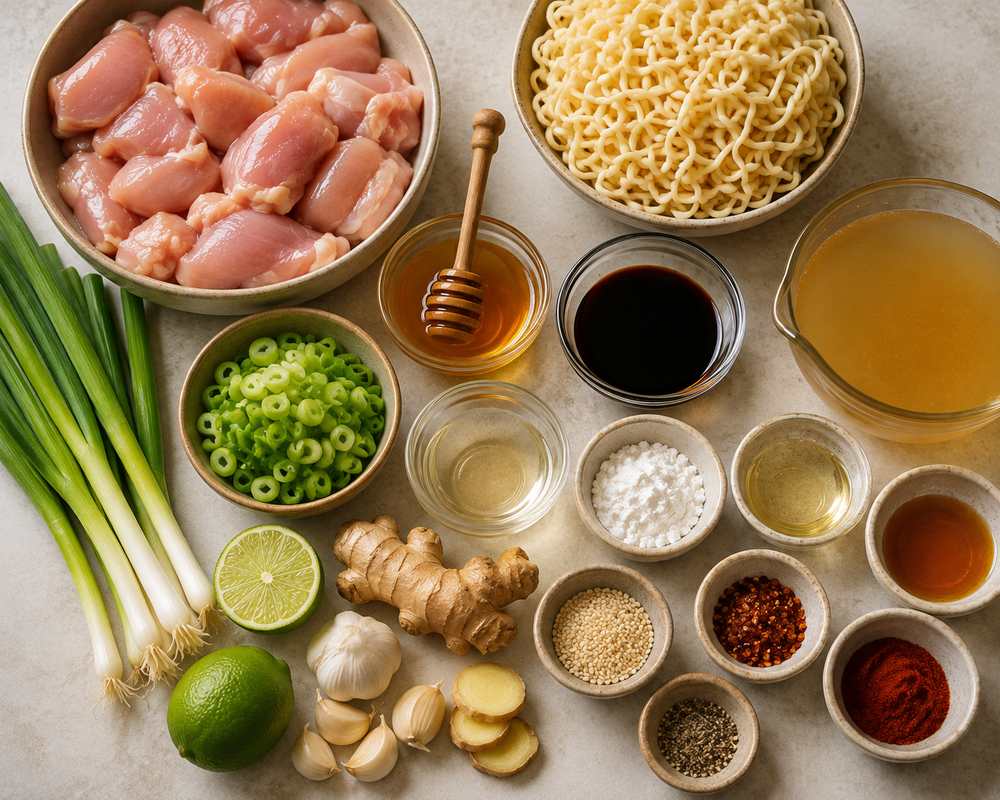
For the Chicken
- 1½ pounds boneless, skinless chicken thighs
- 1 tablespoon low-sodium soy sauce
- 1 teaspoon fresh lime or lemon juice
- 1 teaspoon neutral cooking oil
- ½ teaspoon garlic powder
- ½ teaspoon smoked paprika
- ½ teaspoon ground black pepper
- ¼ teaspoon salt
- 3 tablespoons cornstarch
- 2 tablespoons neutral cooking oil, divided
For the Honey-Garlic Sauce
- ¼ cup honey
- ¼ cup low-sodium soy sauce
- ⅓ cup low-sodium chicken broth
- 1 tablespoon rice vinegar
- 1 tablespoon fresh lime juice
- 5 garlic cloves, finely minced or grated
- 2 teaspoons freshly grated ginger
- ½ teaspoon red pepper flakes, optional
- ¼ teaspoon ground black pepper
For the Cornstarch Slurry
- 2 teaspoons cornstarch
- 2 tablespoons cold water
For the Noodles
- 12 ounces plain curly ramen, lo mein, or egg noodles
- Water, for boiling
- Salt, when required by the noodle package
- ½ cup reserved noodle water
For the Scallion Finish
- 5 scallions
- 1 teaspoon toasted sesame oil
- 1 tablespoon toasted sesame seeds
- Lime wedges, optional
- Additional red pepper flakes, optional
How to Make Honey-Garlic Chicken Noodles
Step 1: Prepare the Scallions
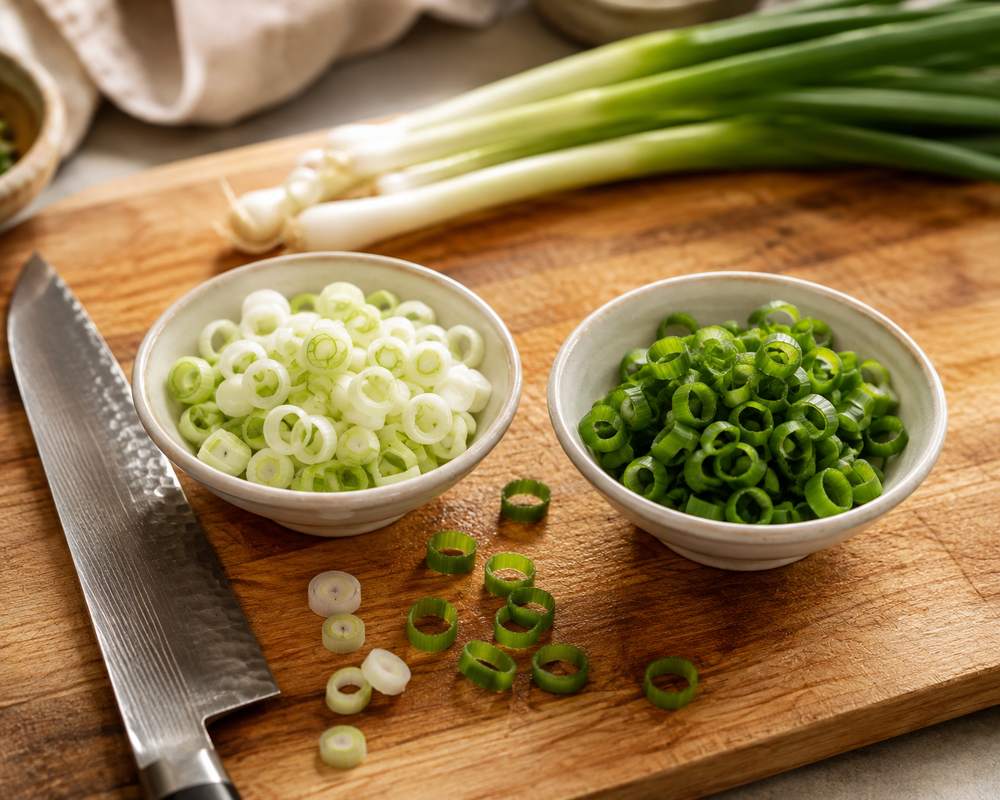
Trim the root ends from the scallions.
Separate the white and light-green sections from the darker green tops.
Thinly slice both portions, but keep them in separate bowls.
The pale pieces will cook with the garlic and ginger. The green tops will be added after cooking so they stay fresh and colorful.
Step 2: Cut and Season the Chicken
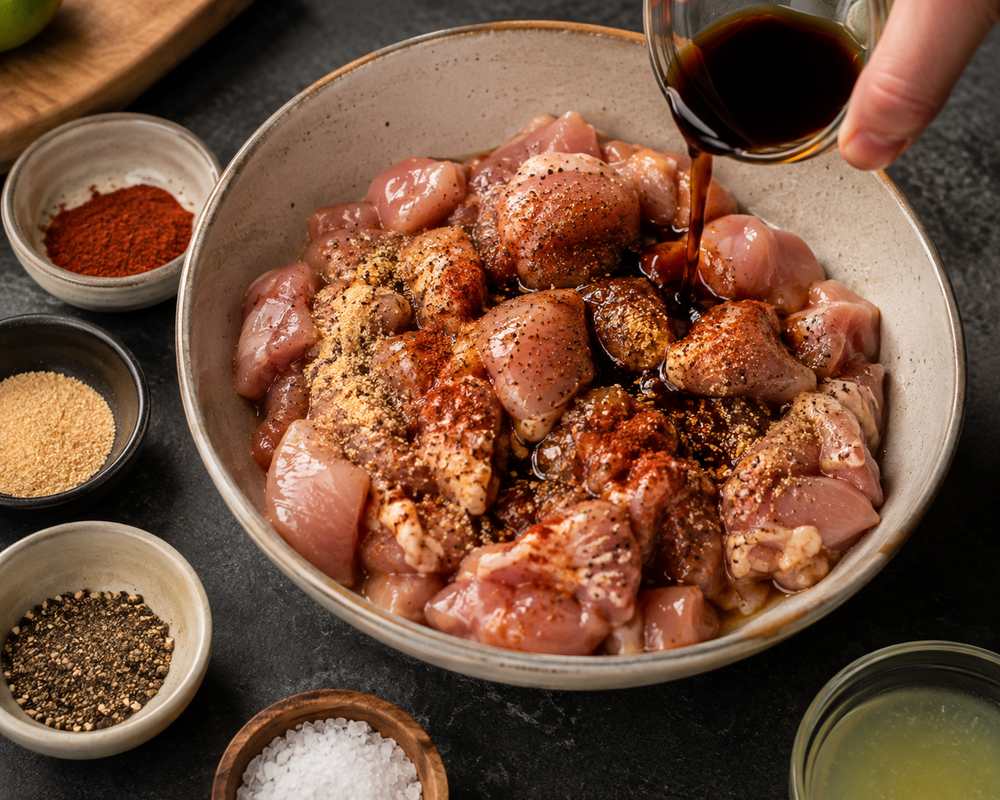
Trim any large pieces of excess fat from the chicken thighs.
Cut the meat into approximately 1-inch pieces.
Keeping the pieces similar in size helps them cook at roughly the same pace.
Place the chicken in a bowl and add:
- Soy sauce
- Lime or lemon juice
- Neutral oil
- Garlic powder
- Smoked paprika
- Black pepper
- Salt
Toss until every piece is lightly seasoned.
Let the chicken rest for 10 to 15 minutes while you prepare the sauce.
This is a short seasoning period rather than a long marinade. Too much liquid would make browning more difficult.
Step 3: Mix the Honey-Garlic Sauce
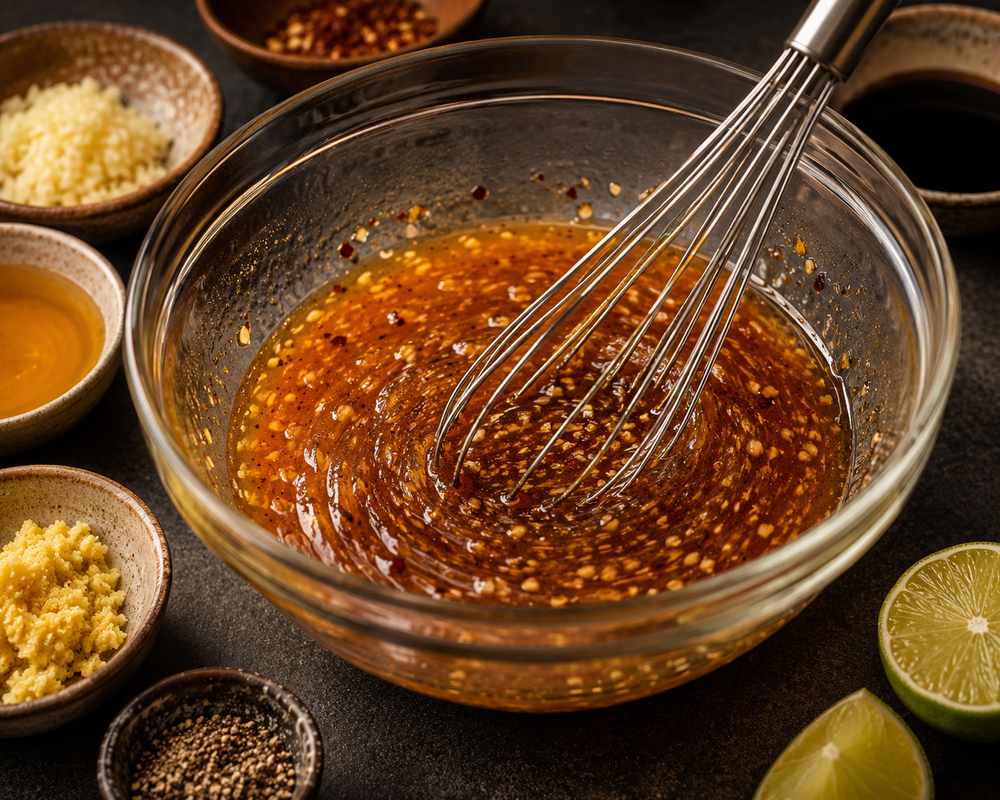
Add the honey to a medium bowl.
Pour in the soy sauce gradually while whisking. Once the honey loosens, add:
- Chicken broth
- Rice vinegar
- Lime juice
- Garlic
- Ginger
- Red pepper flakes
- Black pepper
Whisk until the honey is fully incorporated.
Set the sauce near the stove.
It should look fairly thin at this stage. The sauce will reduce slightly in the skillet and then receive a small amount of cornstarch slurry.
Step 4: Prepare the Slurry
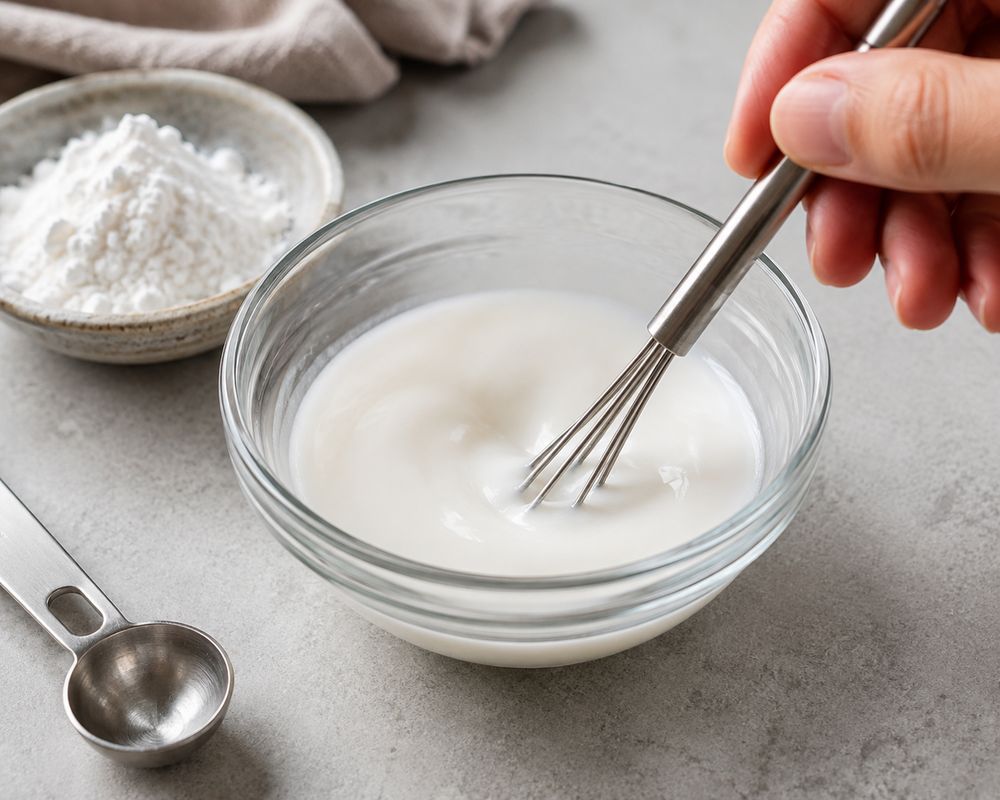
In a small bowl, stir together the cornstarch and cold water.
Continue stirring until no dry pockets remain.
Set it aside.
Cornstarch settles quickly, so stir it again immediately before adding it to the sauce.
Step 5: Coat the Chicken
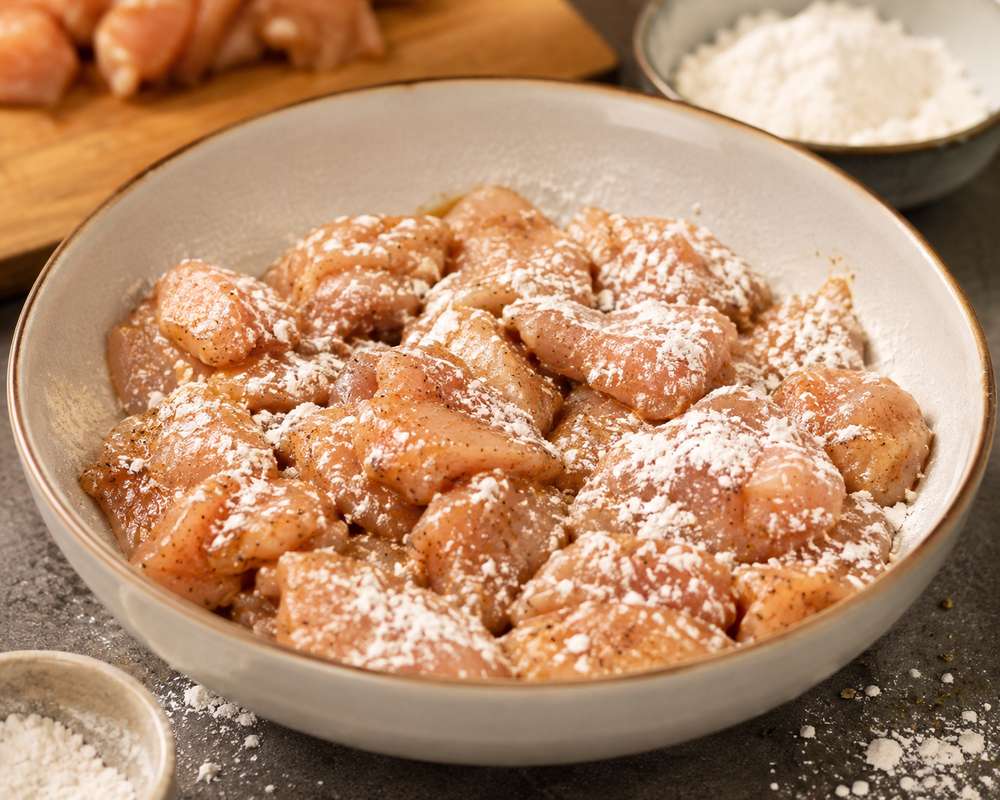
Sprinkle 3 tablespoons of cornstarch over the seasoned chicken.
Toss until each piece has a thin, slightly powdery coating.
The chicken should not look heavily breaded.
When wet patches remain, separate the pieces and toss again. Avoid adding large amounts of extra cornstarch because a thick coating can become gummy once the sauce is added.
Let the coated chicken sit for about 5 minutes.
Step 6: Boil the Noodles
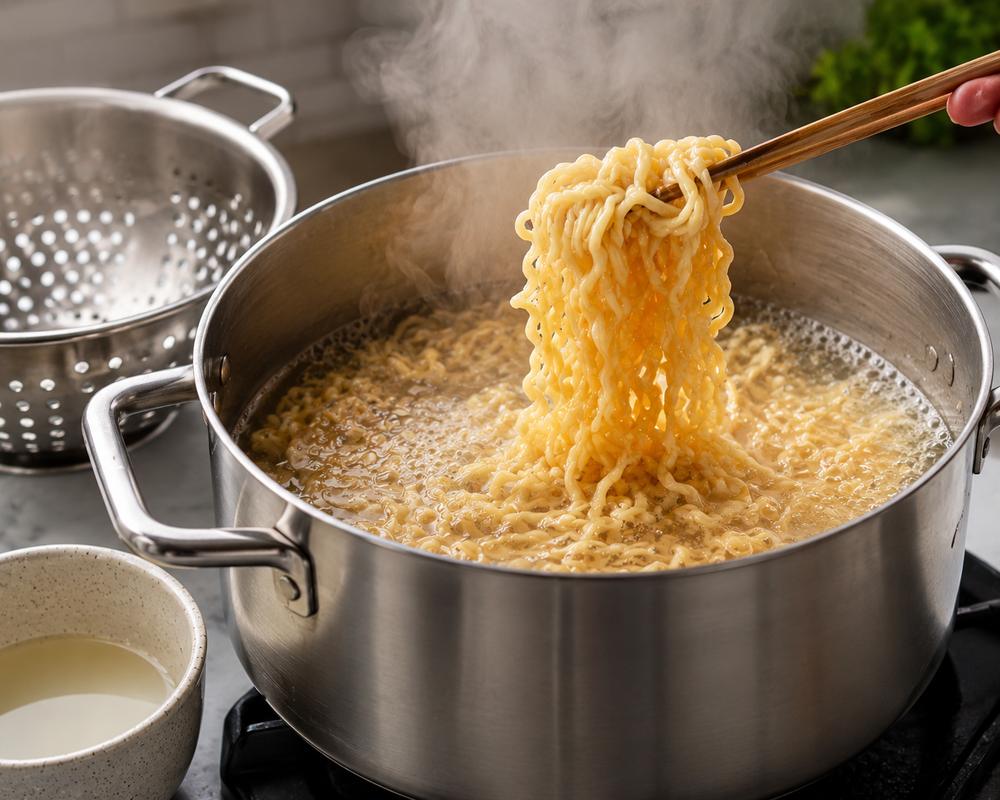
Bring a large pot of water to a boil.
Cook the noodles approximately 1 minute less than the package’s suggested time.
They should be flexible but still slightly firmer than you want to eat them because they will finish cooking in the skillet.
Before draining, reserve ½ cup of the noodle water.
Drain the noodles thoroughly.
Do not add oil. Oil can make it more difficult for the sauce to cling to the surface.
When using instant ramen bricks, discard the seasoning packets.
Step 7: Heat the Skillet
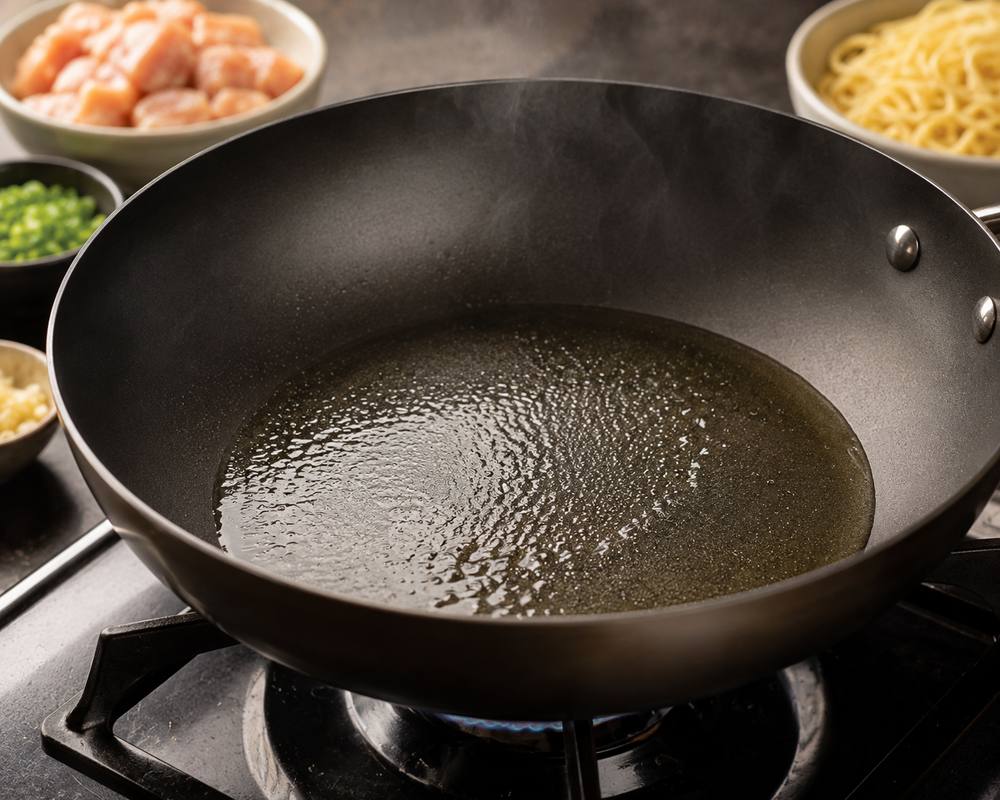
Place a large skillet or wok over medium-high heat.
Add 1 tablespoon neutral oil.
Allow the pan to heat until the oil looks fluid and begins shimmering.
The skillet needs to be hot enough to brown the chicken quickly, but it should not be smoking heavily.
Step 8: Brown the First Batch
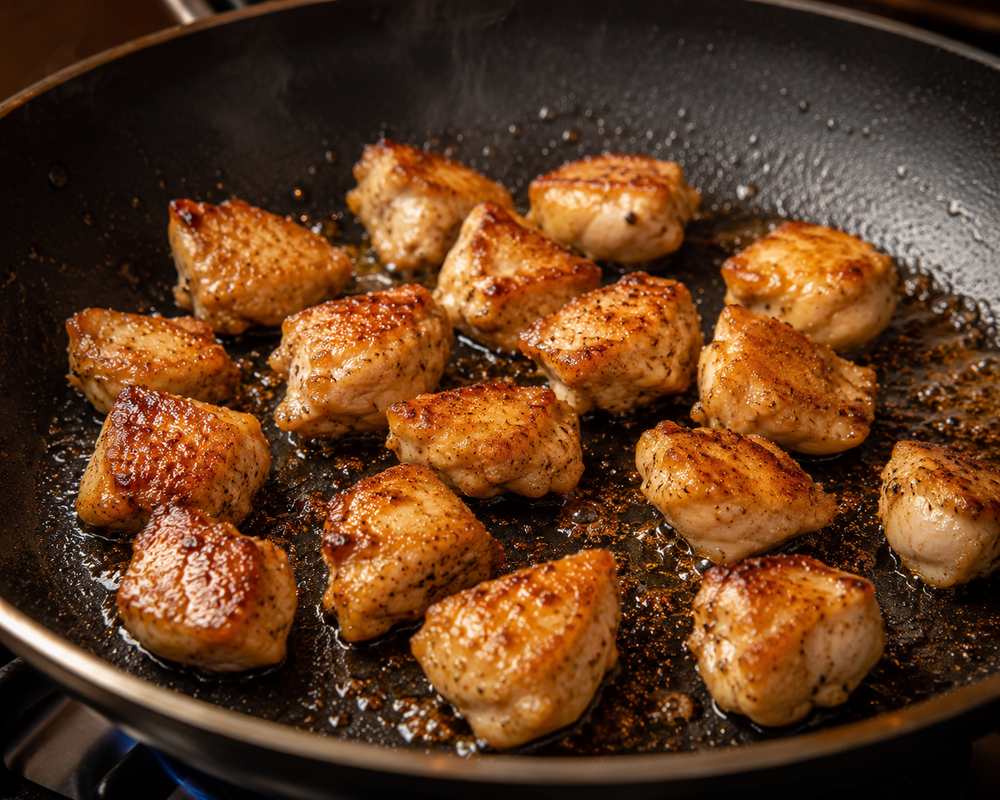
Add half of the chicken in a single layer.
Leave the pieces alone for about 2 minutes.
Moving them immediately prevents the cornstarch coating from developing color.
Once the bottoms look golden and release fairly easily, turn the pieces.
Cook for another 2 to 3 minutes.
Transfer the mostly cooked chicken to a clean plate.
Step 9: Brown the Remaining Chicken
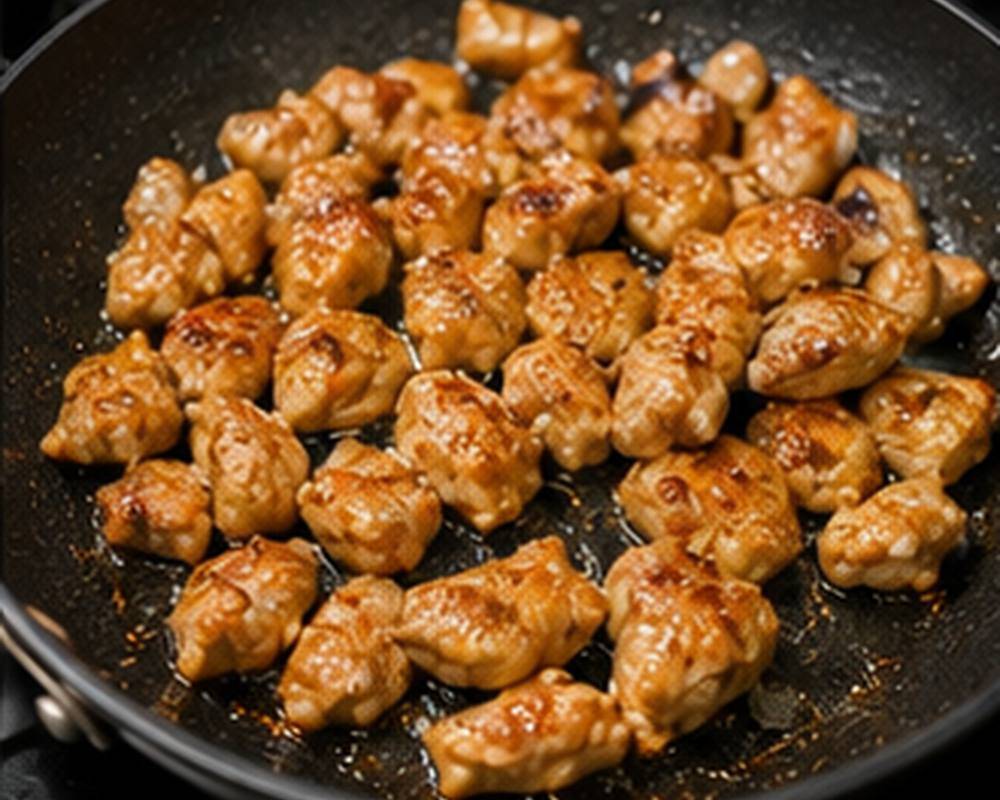
Add the remaining tablespoon of oil when the skillet looks dry.
Cook the second batch in the same way.
Avoid piling all the chicken into the skillet together. An overcrowded pan collects released moisture, and the chicken begins steaming instead of browning.
Transfer the second batch to the plate.
The chicken will finish cooking later in the sauce.
Step 10: Cook the Scallion Whites
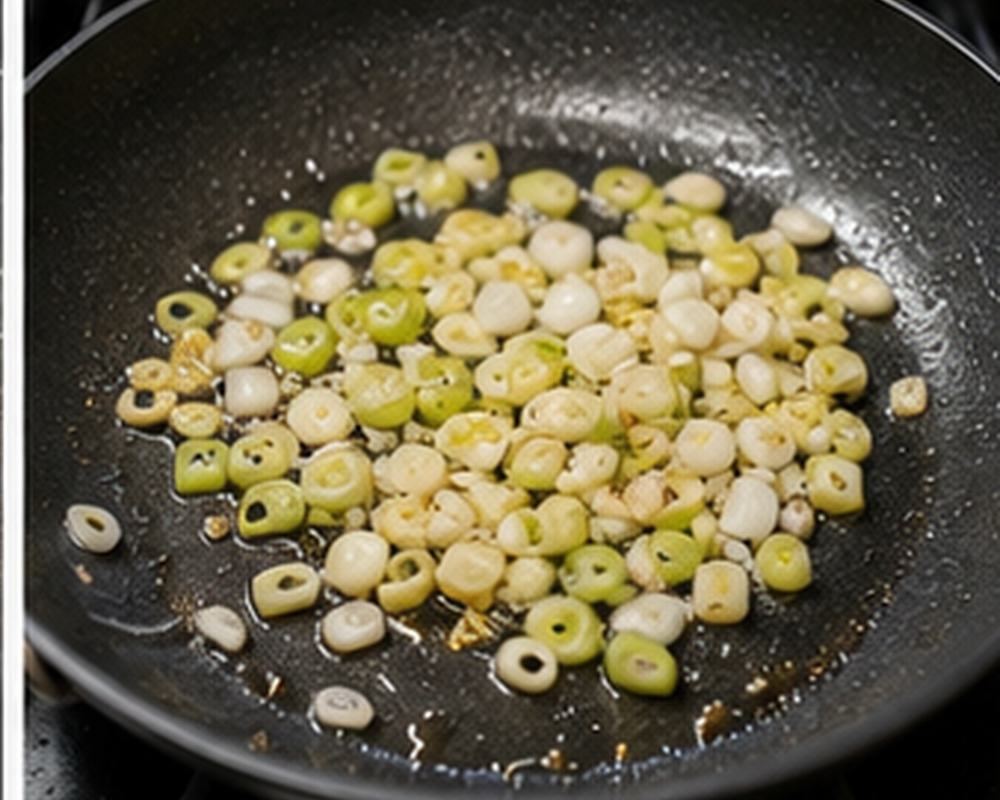
Reduce the heat to medium.
Add the sliced white and light-green scallion pieces to the skillet.
Cook for approximately 30 seconds, stirring frequently.
They should soften slightly and pick up flavor from the browned chicken bits without becoming dark.
Step 11: Add the Prepared Sauce
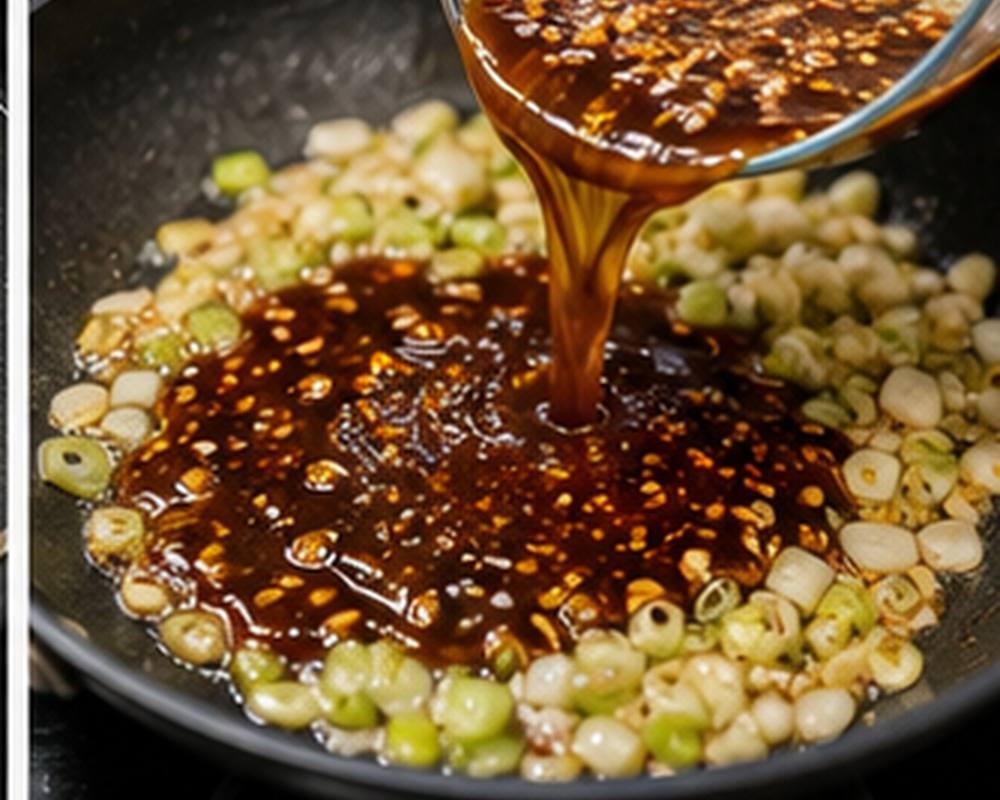
Whisk the honey-garlic mixture again and pour it into the skillet.
As it begins heating, use a wooden spoon or spatula to loosen the browned pieces from the bottom.
Bring the sauce to a gentle simmer.
Cook for 1 to 2 minutes, stirring regularly.
Do not use very high heat. Honey can scorch and become unpleasantly bitter when boiled aggressively.
Step 12: Thicken the Glaze Gradually
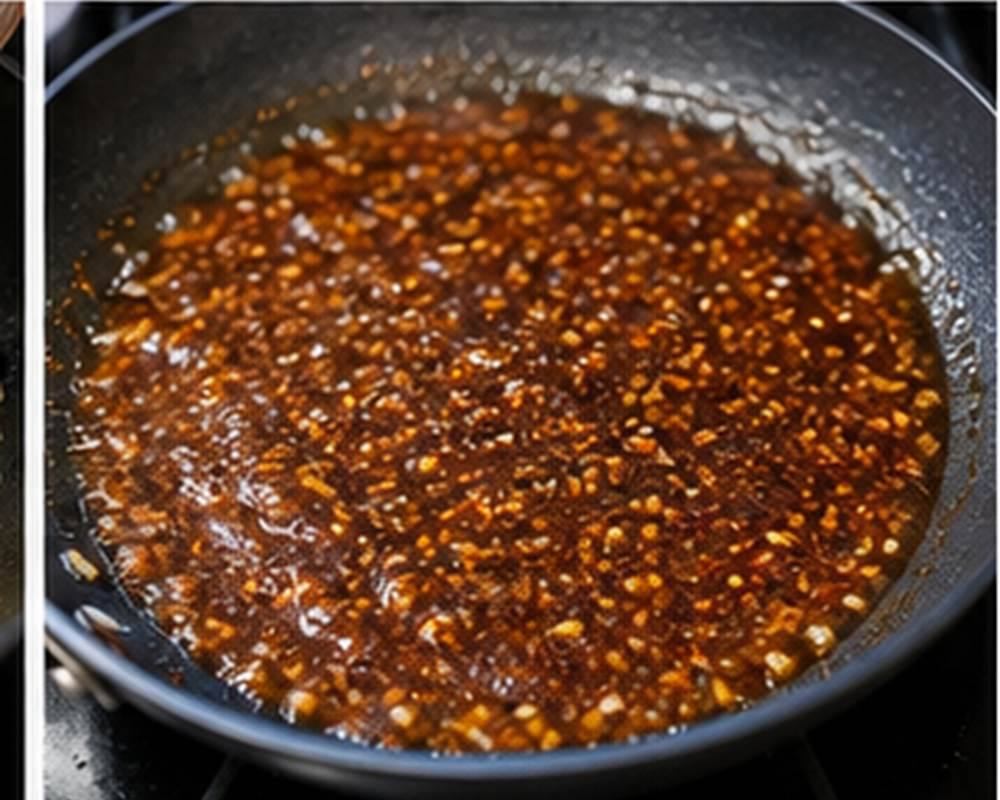
Stir the cornstarch slurry again.
Begin by pouring approximately half of it into the simmering sauce while whisking.
Cook for 20 to 30 seconds.
Check the consistency before adding the rest.
The ideal sauce should coat a spoon but still drip from it easily. It needs to remain loose enough to move through the noodles.
Add more slurry only when necessary.
If it becomes too thick, stir in reserved noodle water 1 tablespoon at a time.
Step 13: Return the Chicken
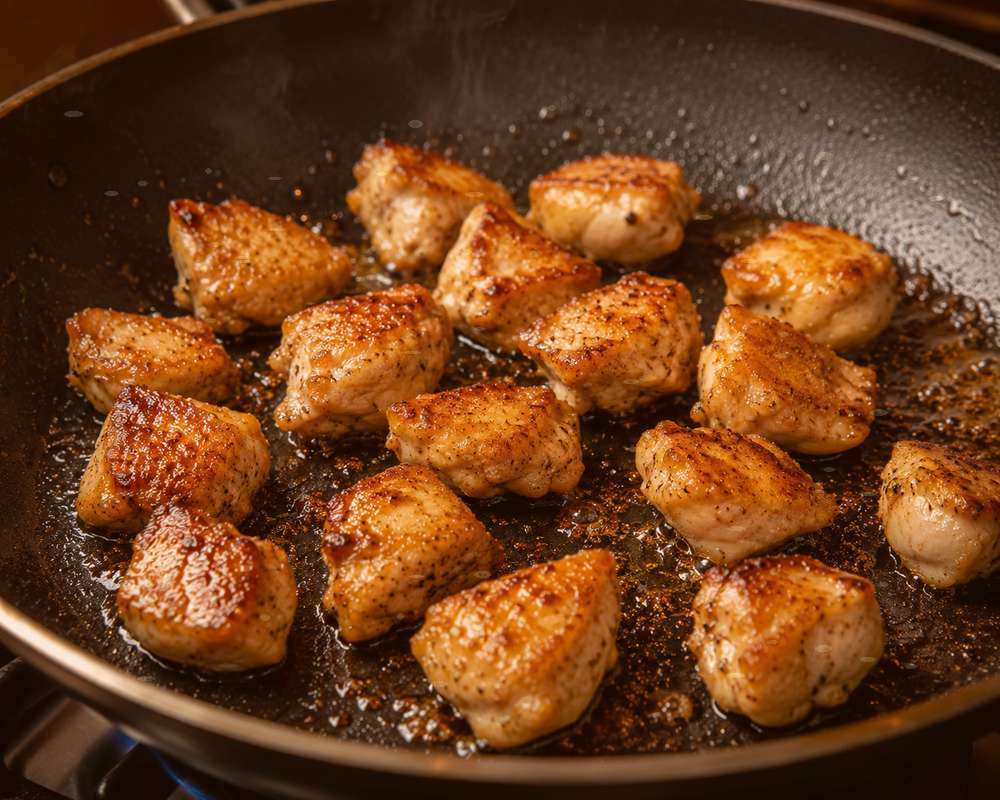
Add the browned chicken and any juices from the plate to the skillet.
Turn the pieces through the sauce.
Simmer gently for 2 to 3 minutes, or until the chicken is fully cooked and coated in a glossy glaze.
Chicken should reach an internal temperature of 165°F or 74°C when checked in a thicker piece.
Do not keep simmering after the chicken is ready. The sauce will continue reducing and the small pieces of meat can dry out.
Step 14: Add the Noodles
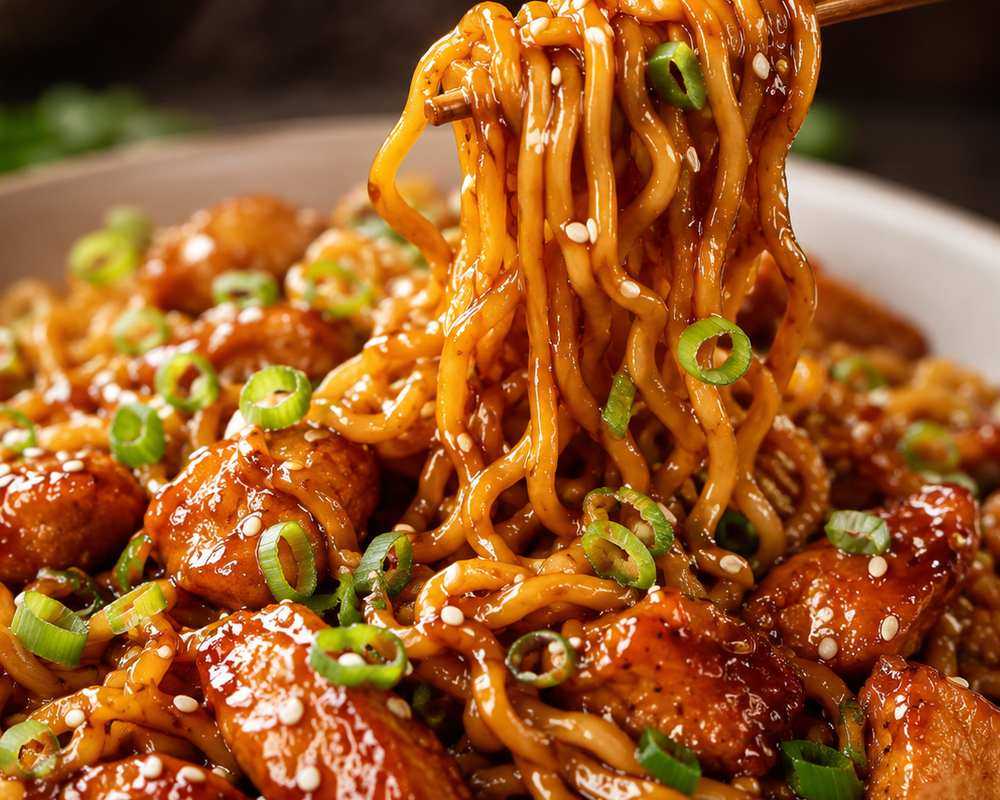
Add the drained noodles to the skillet.
Use tongs to lift and fold them through the chicken and sauce.
Rather than stirring in tight circles, lift noodles from the bottom and turn them over the top. This distributes the sauce without breaking delicate strands.
Cook for approximately 1 minute.
Add reserved noodle water a tablespoon at a time whenever the noodles look dry or difficult to toss.
Step 15: Finish with Sesame Oil
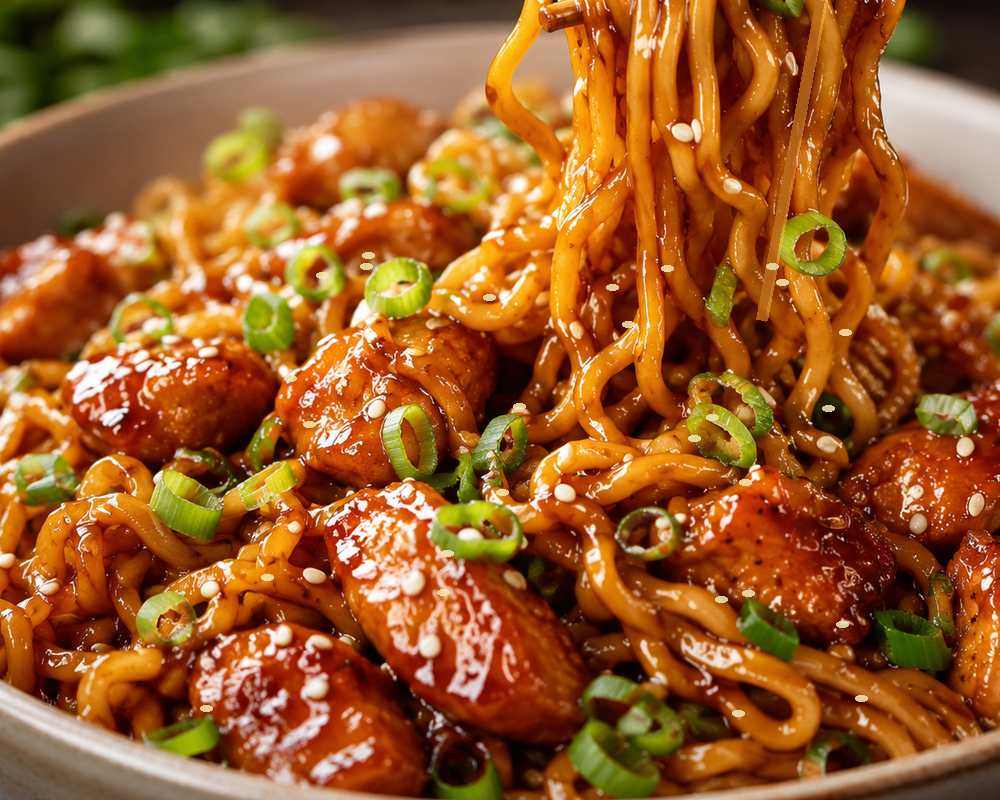
Turn off the heat.
Add:
- Toasted sesame oil
- Half of the green scallion tops
- Half of the sesame seeds
Toss briefly.
Adding sesame oil after turning off the heat preserves more of its toasted aroma.
Taste one noodle and one piece of chicken together before adjusting the seasoning.
Step 16: Garnish and Serve
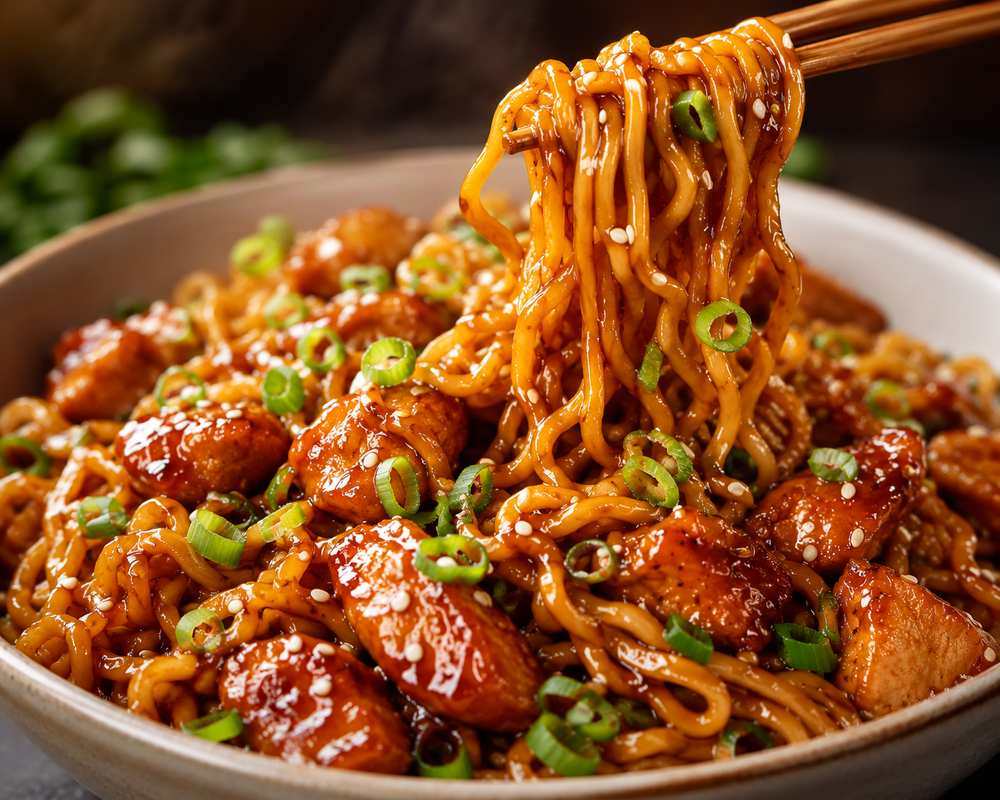
Divide the noodles between warm bowls.
Top each serving with:
- Remaining scallion greens
- Remaining sesame seeds
- Red pepper flakes, when desired
- A squeeze of lime
Serve immediately.
The sauce will continue thickening as it cools, so the noodles are at their glossiest shortly after leaving the skillet.
Tips for the Best Chicken Noodles
Prepare Everything Before Heating the Skillet
Once cooking begins, the steps move quickly.
Have the noodles drained, sauce mixed, slurry ready, and scallions sliced before browning the chicken.
Use a Wide Pan
A wide skillet provides more hot surface for browning.
A small, crowded saucepan traps moisture and produces paler chicken.
Do Not Skip Batch Cooking
Cooking two batches takes a few extra minutes, but the difference in texture is worth it.
Measure the Honey
Pouring honey directly from the bottle makes the sweetness harder to control.
The aim is a balanced glaze, not chicken candy.
Add the Slurry Slowly
You may not need every drop.
The amount required can change depending on how much the sauce reduces and how starchy the noodle water is.
Keep Some Noodle Water
Reserved noodle water is the easiest fix for sauce that becomes too thick.
Regular water works, but noodle water helps the glaze stay cohesive.
Finish, Don’t Simmer, the Noodles
The noodles need only enough time to become coated and hot.
Simmering them in the sauce for several minutes can make them overly soft.
Add Fresh Scallions Last
Cooked scallion whites build flavor in the sauce.
Fresh green tops provide contrast and prevent the finished dish from looking completely brown.
Common Problems and Quick Fixes
The Chicken Did Not Brown
Possible reasons include:
- The skillet was not hot enough
- Too much chicken was added
- The chicken had excess liquid
- The pieces were moved too early
Cook in batches and let the first side remain against the skillet long enough to develop color.
The Sauce Became Too Thick
Add reserved noodle water or chicken broth, 1 tablespoon at a time.
Toss after each addition until the sauce looks glossy again.
The Sauce Is Too Thin
Let it simmer briefly before adding more slurry.
Cornstarch takes a little time to show its full thickening effect.
The Noodles Are Too Soft
They were probably cooked completely during boiling and then cooked again in the skillet.
Next time, drain them 1 to 2 minutes earlier.
The Dish Tastes Too Sweet
Add:
- A squeeze of lime
- A teaspoon of rice vinegar
- A small splash of soy sauce
Make adjustments gradually.
The Dish Tastes Too Salty
Add a little noodle water and lime juice.
Avoid adding extra honey immediately; that can leave the sauce both salty and overly sweet.
Best Noodles to Use
Plain Curly Ramen
Curly ramen gives the closest visual result to the sample image and catches plenty of glaze.
Discard the seasoning packet.
Lo Mein
Lo mein noodles are springy and sturdy enough for vigorous tossing.
Egg Noodles
Egg noodles provide a softer, richer texture.
Cook them carefully because some varieties become tender quickly.
Udon
Udon makes a thicker, chewier version.
Pre-cooked udon usually needs only a brief warm-up.
Spaghetti
Spaghetti is a practical substitute when specialty noodles are unavailable.
The shape will be different, but the sauce still works.
Easy Vegetable Additions
Add approximately 2 cups of vegetables without significantly changing the amount of sauce.
Good choices include:
- Thinly sliced bell peppers
- Small broccoli florets
- Shredded carrots
- Snow peas
- Mushrooms
- Shredded cabbage
- Baby spinach
- Sliced zucchini
Cook firm vegetables after removing the chicken.
Soft vegetables such as spinach can be added with the noodles.
Avoid filling the skillet with too many vegetables unless you increase the sauce, because they will dilute both the seasoning and the amount available for coating the noodles.
Make It Mild or Spicy
Mild
Leave out the red pepper flakes.
Serve chili sauce separately.
Medium
Use ½ teaspoon red pepper flakes in the sauce.
Spicy
Add:
- 1 teaspoon red pepper flakes
- 1 teaspoon chili-garlic sauce
- Thinly sliced fresh chili for serving
Less Sweet
Reduce the honey to 3 tablespoons.
Add another 2 tablespoons chicken broth.
Sweeter
Add 1 additional tablespoon honey after tasting the finished sauce.
More Tangy
Add another teaspoon of rice vinegar or lime juice after removing the skillet from the heat.
Ingredient Substitutions
Chicken Breast
Use boneless chicken breast cut into even pieces.
Because breast meat is leaner, check it early and avoid prolonged simmering.
Ground Chicken
Brown ground chicken in the skillet, breaking it into medium-size pieces.
Skip the cornstarch coating, but keep the slurry for the sauce.
No Honey
Use maple syrup or date syrup.
The flavor and viscosity will differ slightly.
No Rice Vinegar
Use apple cider vinegar or additional lime juice.
No Chicken Broth
Use water with a small pinch of salt.
No Sesame Oil
Leave it out rather than replacing it with regular oil.
The dish will still have plenty of flavor.
Gluten-Free Option
Use:
- Gluten-free tamari
- Gluten-free noodles
- Gluten-free broth
- Certified gluten-free cornstarch
What to Serve with Honey-Garlic Chicken Noodles
The noodles already make a complete meal, so simple, fresh sides work best.
Serve them with:
- Cucumber salad
- Steamed broccoli
- Sautéed bok choy
- Shredded cabbage salad
- Roasted green beans
- Steamed edamame
- Garlic mushrooms
- Fresh lime wedges
A lightly dressed cucumber salad is especially useful because its cool acidity balances the sticky sauce.
Make-Ahead Instructions
The honey-garlic sauce can be mixed up to two days ahead and refrigerated in a covered container.
The chicken can be cut and seasoned several hours in advance.
Do not add the cornstarch coating until shortly before cooking. Moisture gradually absorbs into cornstarch and can make the surface pasty.
The scallions can also be sliced ahead, but store the white and green parts separately.
For the best noodle texture, cook and combine the noodles shortly before serving.
How to Store Leftovers
Allow the noodles to cool briefly and transfer them to a shallow airtight container.
Refrigerate promptly.
Cooked chicken leftovers should be used within 3 to 4 days when properly refrigerated.
The sauce will become thicker during storage because the noodles continue absorbing moisture.
How to Reheat
Skillet Method
Place the noodles in a skillet over medium-low heat.
Add 1 to 3 tablespoons of water or chicken broth.
Cover for about 1 minute, then lift and toss gently until hot.
Finish with fresh scallions.
Microwave Method
Place one portion in a microwave-safe bowl.
Add 1 tablespoon water.
Cover loosely and heat in short intervals, stirring between each one.
Reheated leftovers should reach 165°F or 74°C.
Avoid Very High Heat
Honey-based sauce can become overly thick, while small chicken pieces can dry out.
Gentle reheating with added moisture gives the best result.
Frequently Asked Questions
Are honey-garlic chicken noodles very sweet?
The honey is noticeable, but soy sauce, garlic, ginger, vinegar, broth, and lime keep the finished sauce balanced.
Reduce the honey to 3 tablespoons for a more savory version.
Can I use instant ramen?
Yes.
Discard the seasoning packets and cook the noodle bricks just until they begin separating.
They soften quickly, so drain them earlier than thicker noodles.
Can I make the recipe without ginger?
Yes.
The sauce will still be garlicky and flavorful, although ginger gives it extra warmth and freshness.
Can I use pre-cooked chicken?
Yes.
Prepare the sauce first, then add cooked chicken only long enough to heat it through.
Skip the raw-chicken seasoning and coating steps.
Can I cook the noodles directly in the sauce?
It is not recommended for this version.
Different noodles absorb unpredictable amounts of liquid, making it easy to end up with either dry noodles or a watery sauce.
Can I double the recipe?
Yes, but brown the chicken in several batches.
Use a large wok or divide the final tossing between two skillets so the noodles have enough room.
Why did the noodles stick together?
They may have sat drained for too long or been overcooked.
Loosen them with a splash of hot noodle water before adding them to the skillet.
Can I leave out the slurry?
Yes.
Simmer the sauce a little longer and allow noodle starch to provide some body.
The result will be looser and less glossy.
Can I add scrambled eggs?
Yes.
Scramble two eggs in the skillet before cooking the chicken, transfer them to a plate, and fold them back in with the noodles.

Leave a Reply