
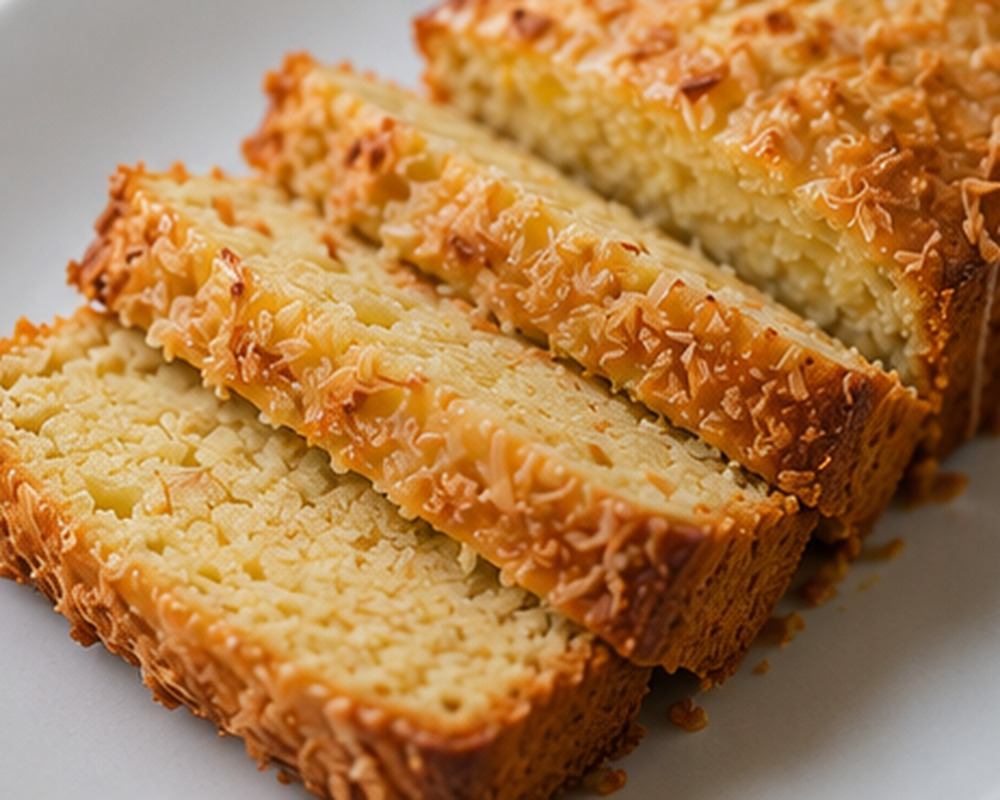
There is something especially inviting about a loaf that looks slightly rustic when it comes out of the oven. This Pineapple Coconut Bread has a golden top, crisp strands of coconut around the edges, and a tender center dotted with small pieces of pineapple.
The batter uses both crushed pineapple and coconut milk. The pineapple gives each slice little pockets of fruit, while the coconut milk adds a gentle richness without making the loaf taste heavy. Some of the coconut is toasted before it goes into the batter, which creates a deeper flavor than using raw coconut alone.
This is not meant to taste like an ordinary vanilla cake with fruit stirred into it. Pineapple is noticeable in every slice, coconut runs through the crumb, and the top has a lightly chewy finish.
It is simple enough for everyday baking but attractive enough to serve at brunch, after dinner, or with afternoon tea.
Ingredients You’ll Need
Crushed Pineapple
Use pineapple packed in juice rather than heavy syrup. Place it in a sieve and allow the excess liquid to drain naturally.
Do not press it until completely dry. The fruit should remain juicy but should not carry a large pool of liquid into the batter.
Shredded Coconut
Unsweetened coconut gives better control over the sweetness. Sweetened coconut can also be used, but the sugar in the batter should be reduced slightly.
Coconut Milk
Use canned, full-fat coconut milk and stir it before measuring. Coconut beverage sold in cartons is thinner and will give a lighter result.
Neutral Oil
Sunflower, canola, or another mild cooking oil works well. Avoid strongly flavored oils.
Vanilla
Use alcohol-free vanilla flavoring or vanilla powder to keep the recipe fully alcohol-free and halal-friendly.
Lime Zest
Lime zest is optional, but a small amount makes the pineapple taste brighter without turning the loaf into a lime-flavored dessert.
Ingredients
For the Loaf
- 1¾ cups all-purpose flour
- 1½ teaspoons baking powder
- ¼ teaspoon baking soda
- ½ teaspoon fine salt
- ⅔ cup granulated sugar
- 2 large eggs, at room temperature
- ⅓ cup neutral oil
- ⅓ cup full-fat coconut milk
- 1 teaspoon alcohol-free vanilla flavoring or ½ teaspoon vanilla powder
- 1 teaspoon finely grated lime zest, optional
- 1 cup crushed pineapple packed in juice, lightly drained
- ⅔ cup shredded unsweetened coconut, divided
For the Golden Top
- 1 tablespoon granulated or coarse sugar
- 2 tablespoons shredded coconut, taken from the measured amount above
Optional Pineapple Drizzle
- ½ cup powdered sugar
- 1 to 2 tablespoons reserved pineapple juice
The drizzle is optional. The loaf is flavorful enough to serve without it.
Before You Begin
Set a fine-mesh sieve over a bowl.
Add the crushed pineapple and leave it to drain for approximately 10 minutes. Reserve a little of the pineapple juice if you plan to make the optional drizzle.
Gently stir the pineapple once. Do not press it firmly with a spoon.
Measure the coconut milk after stirring the can, since the thick and thin portions can separate during storage.
How to Make Pineapple Coconut Bread
Step 1: Toast Part of the Coconut
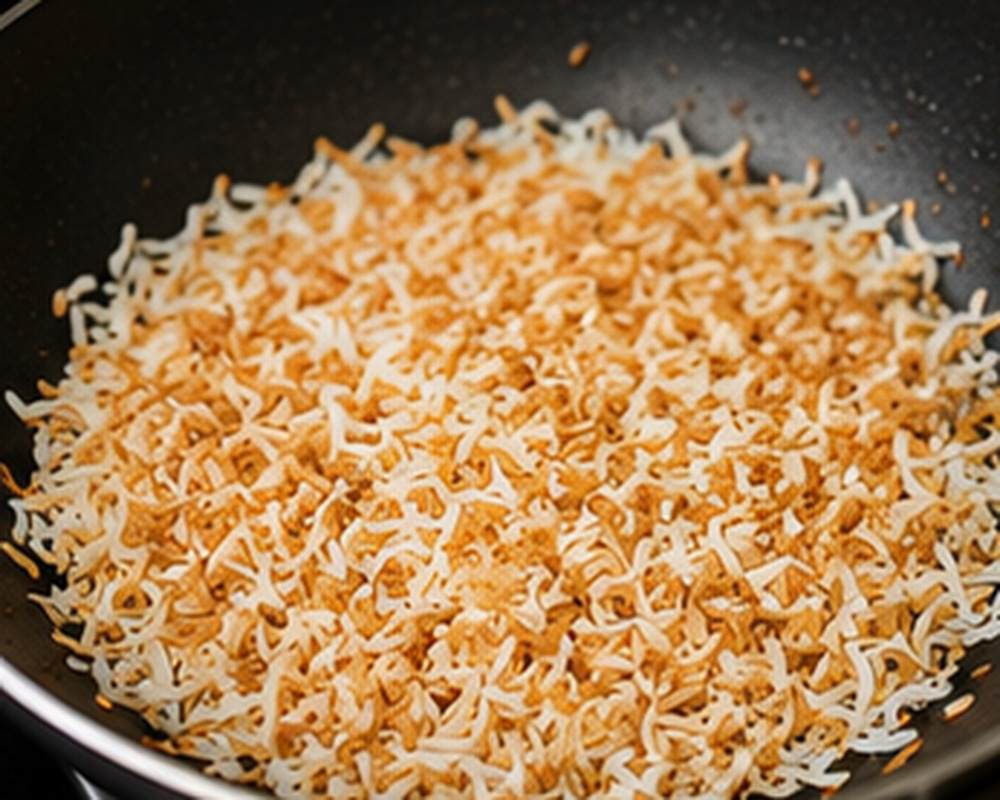
Place ⅓ cup of the shredded coconut in a dry skillet over low heat.
Cook for a few minutes, stirring frequently, until some of the strands become pale golden.
Transfer it immediately to a plate.
The coconut does not need to become dark. A mixture of white and golden strands gives the best result.
Allow it to cool while preparing the batter.
Step 2: Prepare the Pan
Heat the oven to 350°F or 175°C.
Lightly grease an 8½ × 4½-inch or 9 × 5-inch loaf pan.
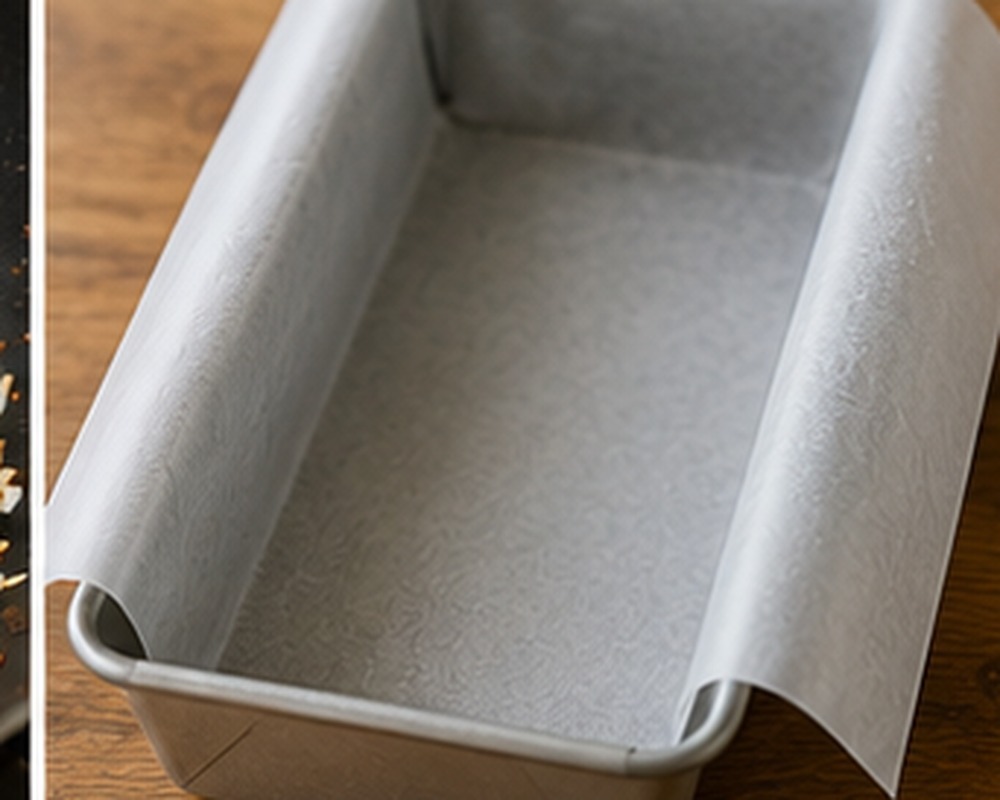
Line the long sides and bottom with parchment paper, leaving enough paper above the edges to lift out the baked loaf.
Step 3: Combine the Dry Ingredients
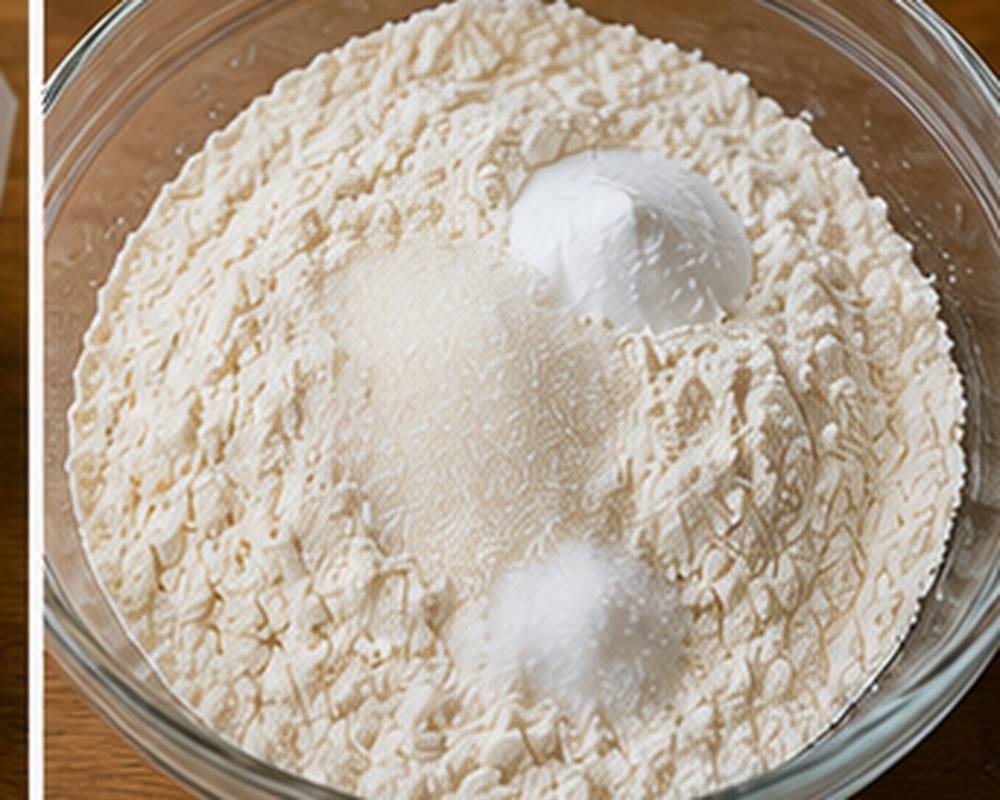
Place the flour, baking powder, baking soda, and salt in a medium bowl.
Whisk until evenly combined.
Break apart any visible lumps in the baking powder or baking soda before setting the bowl aside.
Step 4: Mix the Eggs and Sugar
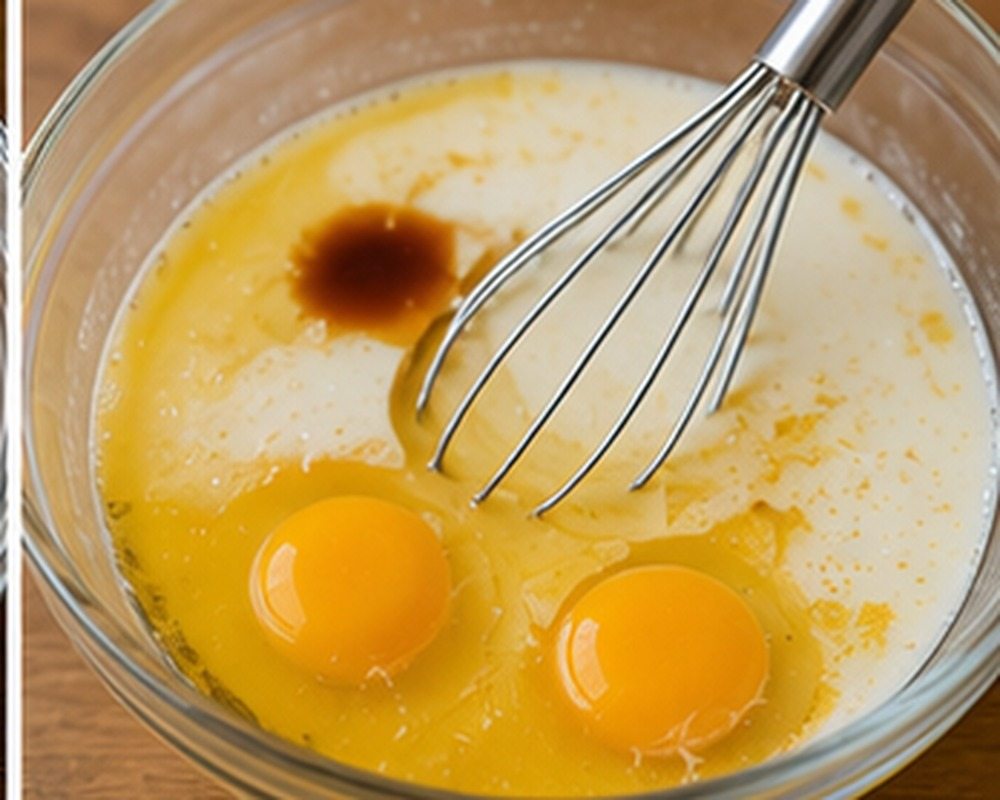
In a large bowl, whisk the eggs and sugar for approximately one minute.
The mixture does not need to become fluffy, but it should look smooth and slightly lighter in color.
Add the oil, coconut milk, alcohol-free vanilla, and lime zest if using.
Whisk again until the liquid mixture looks even.
Step 5: Add the Pineapple and Coconut
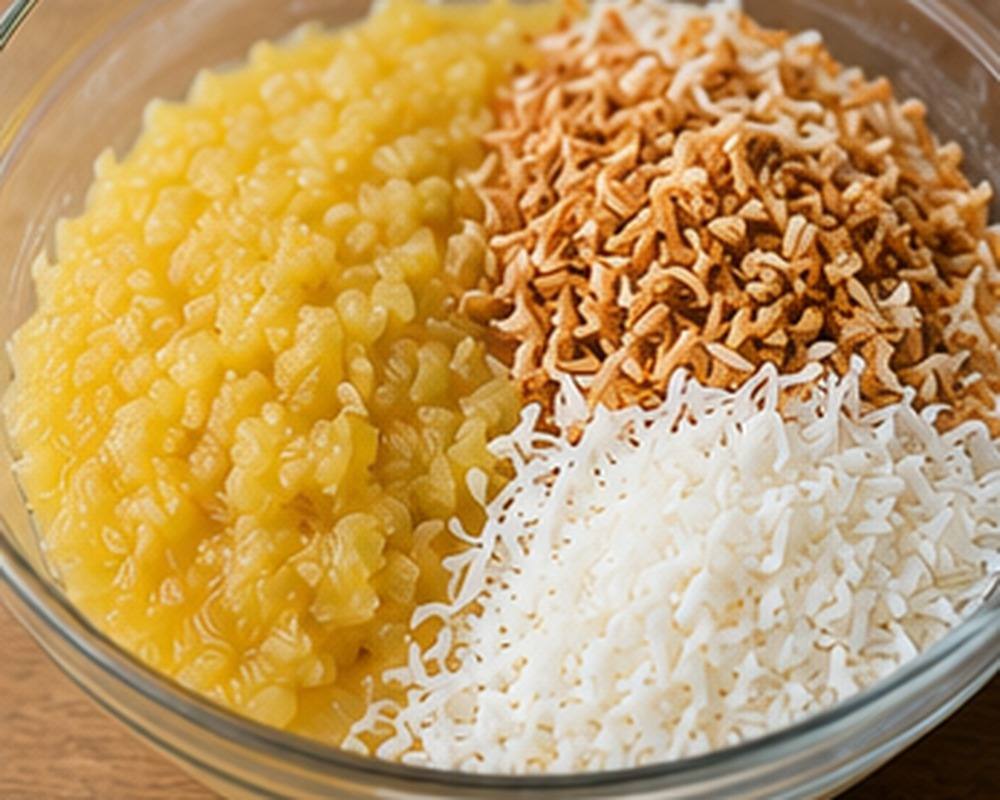
Add the lightly drained pineapple.
Stir in the cooled toasted coconut and all but two tablespoons of the remaining untoasted coconut.
Fold until the pineapple and coconut are spread evenly throughout the mixture.
Reserve the final two tablespoons of coconut for the top.
Step 6: Finish the Batter
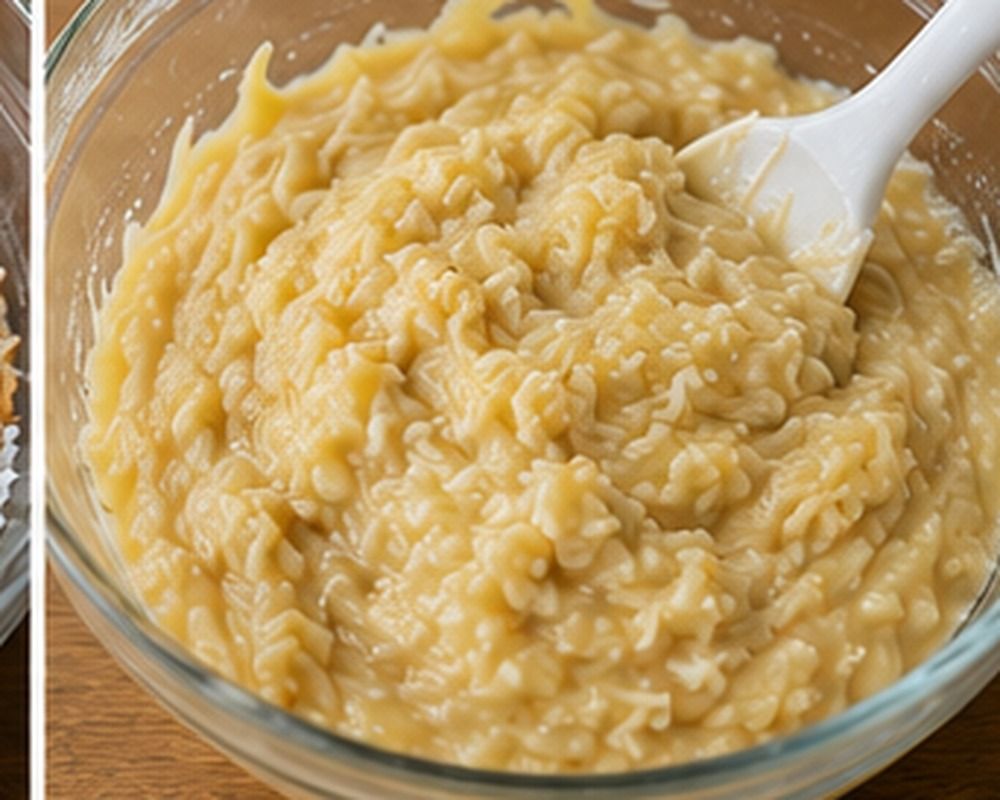
Add half of the flour mixture to the wet ingredients.
Fold slowly with a spatula, then add the remaining flour.
Stop mixing as soon as the visible dry streaks disappear.
The finished batter should be thick enough to mound slightly on the spatula but soft enough to spread into the pan.
If it appears unusually stiff, add one tablespoon of the reserved pineapple juice.
Step 7: Fill the Loaf Pan
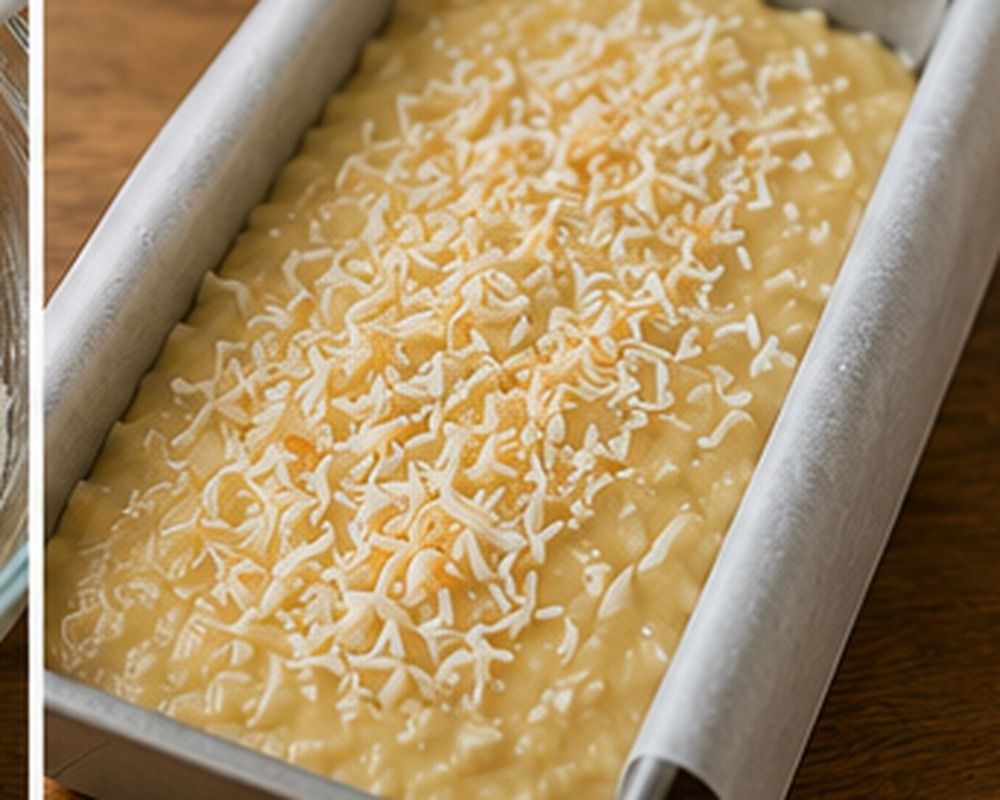
Transfer the batter to the prepared pan.
Spread it into the corners and smooth the surface lightly.
Sprinkle the reserved coconut over the top, followed by one tablespoon of sugar.
Do not press the topping into the batter.
Step 8: Bake
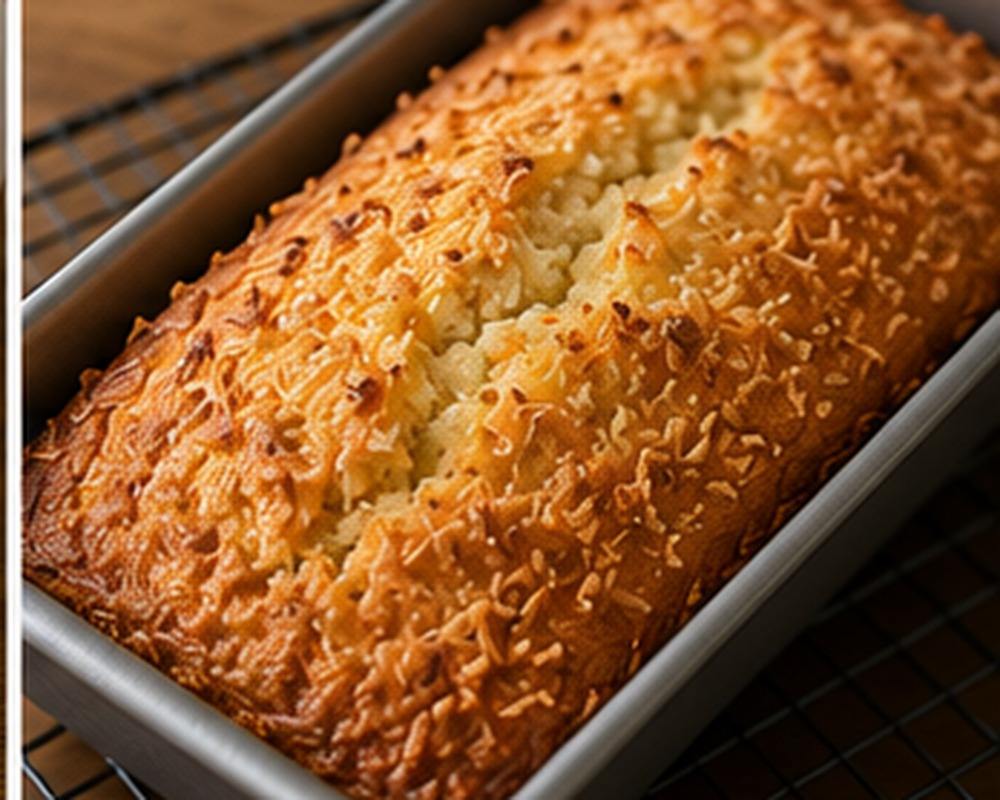
Bake for approximately 50 to 60 minutes.
Begin checking near the 48-minute mark if using the larger loaf pan.
The loaf is ready when:
- The center no longer looks wet.
- The top springs back gently when touched.
- A thin skewer inserted near the middle comes out without raw batter.
A few soft crumbs on the skewer are fine.
If the coconut topping darkens too quickly, loosely cover the pan with foil during the final 15 minutes.
Step 9: Cool Properly
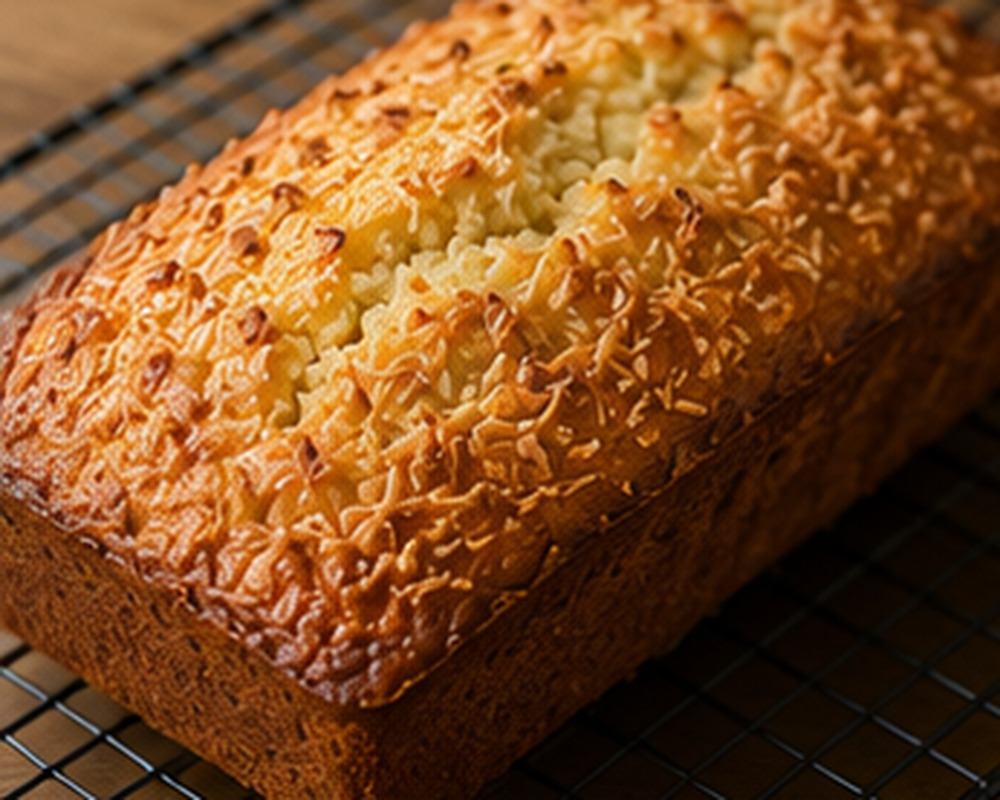
Place the pan on a cooling rack and leave the loaf inside for 15 minutes.
Lift it from the pan using the parchment paper.
Remove the parchment and allow the loaf to cool directly on the rack.
Wait until it is mostly cool before slicing. The interior continues settling as the steam escapes.
Step 10: Add the Optional Drizzle
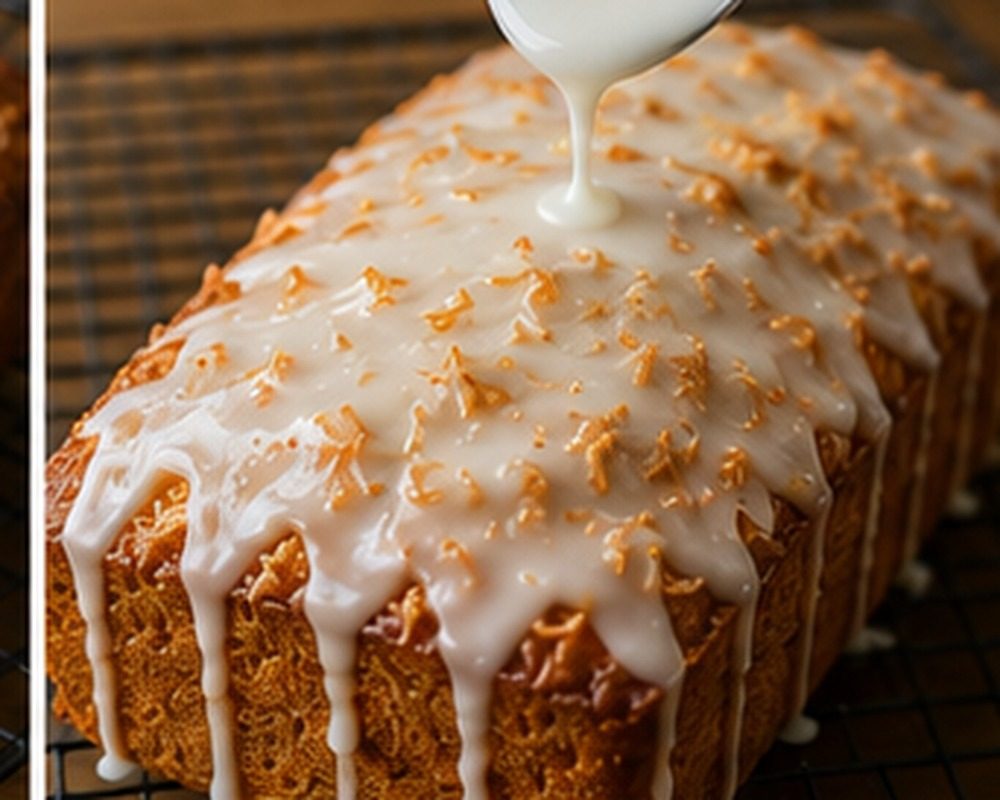
Combine the powdered sugar with one tablespoon of reserved pineapple juice.
Stir until smooth.
Add more juice a few drops at a time until the glaze falls slowly from the spoon.
Drizzle it over the completely cooled loaf.
Allow it to set before cutting.
Serving Ideas
Serve thick or thin slices with:
- Black tea
- Coffee
- Warm milk
- Fresh pineapple
- Plain halal yogurt
- Softened butter
- Coconut cream
- A small spoonful of pineapple preserve
For dessert, warm a slice briefly and serve it with unsweetened whipped cream or halal-certified vanilla ice cream.
How to Store
Keep the completely cooled, unglazed loaf in a tightly closed container at a cool room temperature for up to two days.
For longer storage, refrigerate it and use it within three to four days. USDA guidance generally recommends using refrigerated cooked leftovers within three to four days.
Place parchment between slices if storing them individually.
Let refrigerated slices sit at room temperature briefly before serving, or warm them for a few seconds.
Freezing Instructions
Cool the loaf fully before freezing.
Wrap either the whole loaf or individual slices securely, then place them inside a freezer-safe container.
Freeze without the glaze for up to two months for the best texture.
Thaw wrapped slices at room temperature so condensation remains on the wrapping rather than settling on the bread.
Frequently Asked Questions
Can I use pineapple chunks?
Crushed pineapple gives a more even loaf.
Pineapple chunks can be used if they are chopped into very small pieces and drained well.
Can I use fresh pineapple?
Yes.
Finely chop it, drain off excess juice, and measure one cup after chopping.
Fresh pineapple may produce a slightly different level of sweetness depending on ripeness.
Can sweetened coconut be used?
Yes.
Reduce the granulated sugar by approximately two tablespoons so the loaf does not become overly sweet.
Can carton coconut milk replace canned coconut milk?
It can, but the loaf may taste less rich because carton coconut beverages are usually thinner.
Does the recipe need butter?
No.
Oil keeps the loaf soft and allows the pineapple and coconut flavors to remain prominent.
Can I skip toasting the coconut?
Yes.
The loaf will still work, although the coconut flavor will be gentler.
Why is alcohol-free vanilla specified?
Some liquid vanilla extracts use alcohol as a carrier. Alcohol-free vanilla flavoring or vanilla powder keeps this recipe aligned with your halal requirements.
Is the glaze necessary?
No.
The coconut topping gives the unglazed loaf enough sweetness and texture for everyday serving.
Leave a Reply